
Welcome back! Last time we chatted about where everything began. Today, I’m excited to share the journey that’s brought us 2.5 years of dedication and dirt—toward a space that’s finally starting to bloom.
A quick reminder of our starting point (the brambles) and our hopeful horizon (the blooms).
Why I’m writing this blog series
I plan to publish several articles—how-tos, tips, product reviews and more—that I hope will be genuinely helpful. But this particular series is personal. This garden is ours, not just a service we provide. I want you to see what I love: the craft of shaping spaces that feel welcoming and alive, and, more than that, the beauty found in the journey to get there. There’s real satisfaction in the process as much as the outcome—and a quiet reward in belatedly noticing the little details: a new bud opening, a shared moment with a neighbor, the patience to let a plan unfold. Each post will pull back a layer of the work, from the muddy hands to the moments of clarity when a space starts to breathe. If you’re here for practical ideas, inspiration, or honest storytelling, you’ll find it all woven together with the imperfect, hopeful heart of someone who keeps digging, planting, and learning alongside you.
A quick note on perspective
I’m not a professional writer, but I’ve learned that any craft improves with time, patience, and a little courage to try again. This blog is as much a personal experiment as a record of progress—from messy drafts to clearer thoughts, from halting sentences to steady rhythm. I’m here to try, to learn, and to share honestly, even when the truth is imperfect or unfinished. If a line feels clunky or a moment reads too rosy, know that I’m aiming for honesty over polished, and growth over perfection. Thanks for reading along as I discover my voice, one post at a time.
Now, the garden update
Looking back at the photos, it’s hard to recognize the site as it was. Impassable brambles and fallen trees dominated the view, with tangled roots and broken branches telling their own stubborn stories. Even though the wreckage was just 2.5 years behind us, the transformation feels almost like a longer journey—the space has changed so dramatically that the memory of its former chaos often feels distant, almost fictional.
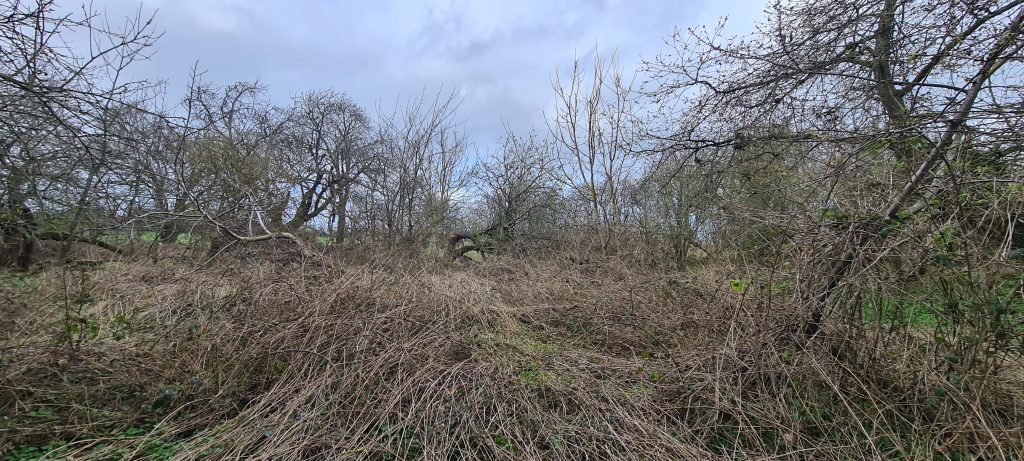
When we began, our objective felt hazy. We just needed to clear. Beneath the brambles and neglect, it was hard to imagine what might lie ahead: a blank canvas, a confetti of potential, and a few stubborn questions about where to start. It wasn’t just about removing obstacles; it was about listening to the space, letting it breathe, and trusting that order would emerge from the mess.
So we started working. No heavy machinery—just strimmers, hedge cutters, and a lot of graft. A long-reach hedge cutter turned out to be a game-changer for bramble clearance, allowing us to reach the heart of the tangle without getting hopelessly buried in thorns. Pro tip: use a long-reach tool to keep a safe distance from your body while you work. It’s amazing how a single tool can change your rhythm and reduce fatigue, making it possible to tackle larger patches in a single pass.
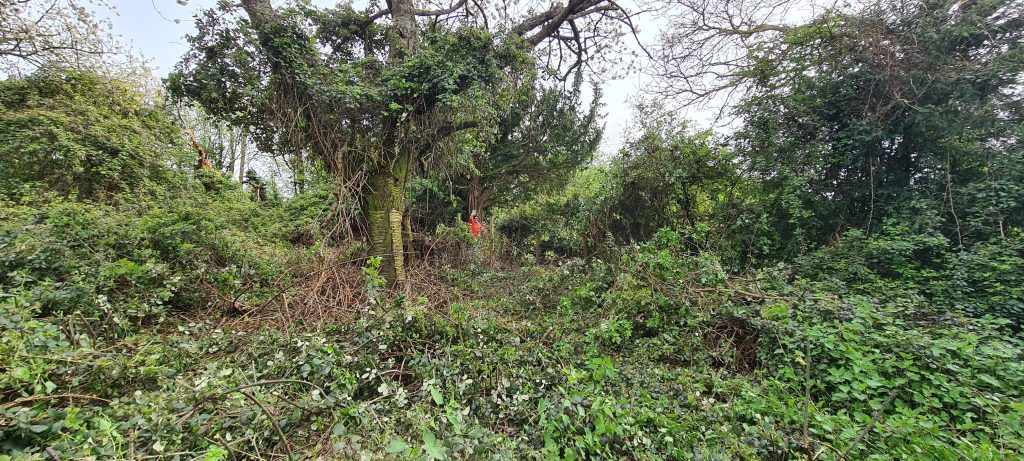
The first big win was simply clearing enough space to see possibility. It wasn’t neat or tidy at first, but the space began to reveal its shape—the hints of a flow, a few sightlines, and the possibility of pathways where there had only been undergrowth. With sturdy boots and steady momentum, we could navigate what was becoming our garden—at least enough to start planning. The ground firms up under your feet, the air feels different when you’re no longer fighting through a wall of brambles, and tiny signs of what could become become a daily, hopeful presence.
Groundwork for a family-friendly space
Top priority: make the ground safe and secure for our dogs to join us and stretch their legs. The garden is as much about them as us. In our own back gardens at our residence in Chatham our gardens are comparability small and while I am grateful to have my garden out look from my living room window, it only measures up to a small haven for entertaining or as far as the dogs a concerned a bathroom. Our aim was different: to create a safe, clearly defined area where the dogs can race after a ball, explore, and be watched over without the constant worry of other dogs or the fear of losing sight of them.
A double-gate system provided extra peace of mind and security, which meant fencing came next.
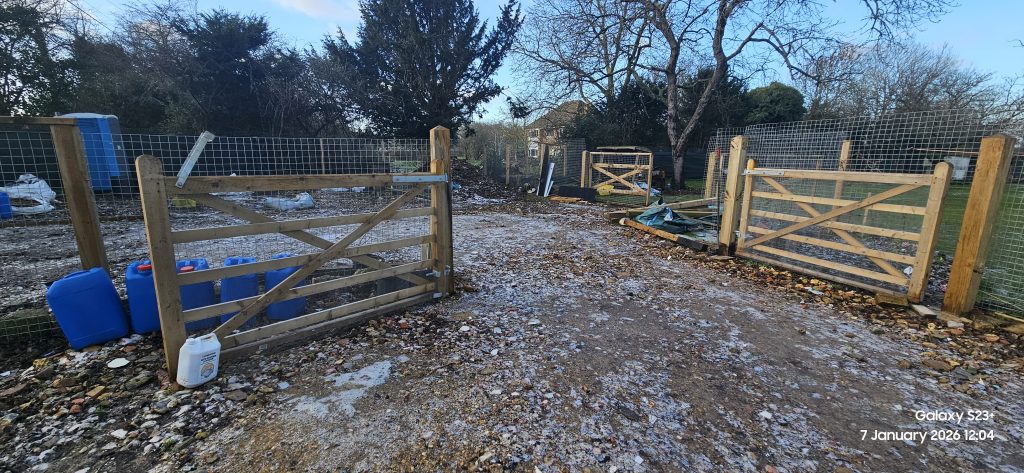
The picture above showing our double gated and current parking area (a finished drive surface is on the agenda but we have so many other more exciting priorities at the moment) is actually taken from a very similar location to the one higher up showing us starting the clearance work.
What a project fencing proved to be. In Sittingbourne and Maidstone soils, those stubborn stones were a major hurdle. We had over 140 two-foot-deep holes to dig. After days of blisters and not a huge amount of progress, we called in the big guns—a digger with an auger—so we could finish the fence.
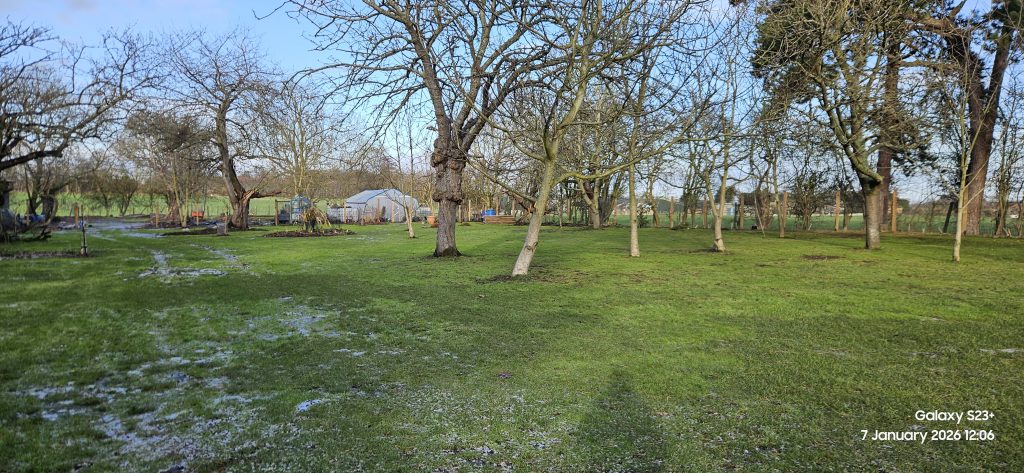
Today, about two-thirds of the garden is secure. We’ve created a dedicated open space, with borders and fruit trees for the dogs to enjoy. The unfenced area remains our growing zone—our little laboratory, if you will, where we can experiment without mischievous paws underfoot. Fencing is still to be finished but for now we are undertaking some slightly more enjoyable projects
A dream comes to life: the polytunnel
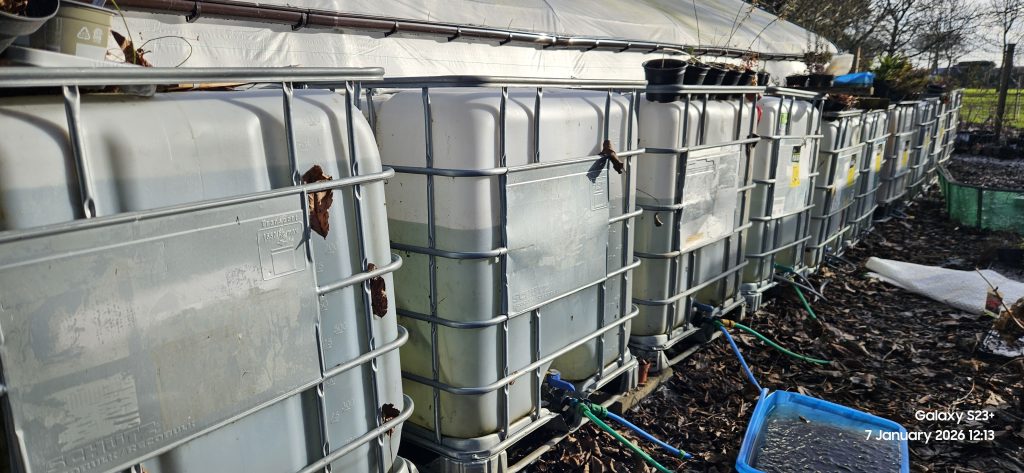
What better growing space than a polytunnel? A lucky, somewhat misdirected trip to a Hampshire show led us to Sunrich Ltd, who offered a polytunnel with gutters—perfect for rainwater harvesting, which is so important to us as we have no water supply on site. With help from their installation service, we welcomed a 12m x 5m polytunnel into our growing map. Compared to my tiny home greenhouse (147 cm x 72 cm), this was a major upgrade and an absolute dream come true.
Access and visibility
Up until now, we accessed the property from the neighboring side (with permission, of course). For long-term growth, we needed our own entrance.
A Maidstone borough council application, six weeks, and a roadside hedge removal later, we opened a new access point. The road sits a little higher, which made us feel exposed for a moment, but the positive is a new level of community engagement. Opening up brought conversations with neighbors, and that sense of connection has been a wonderful side effect.
Hedge basics and other essentials
We added a robust storage system (we accumulate a lot of stuff in a growing space), and built compost bays to keep pace with demand.
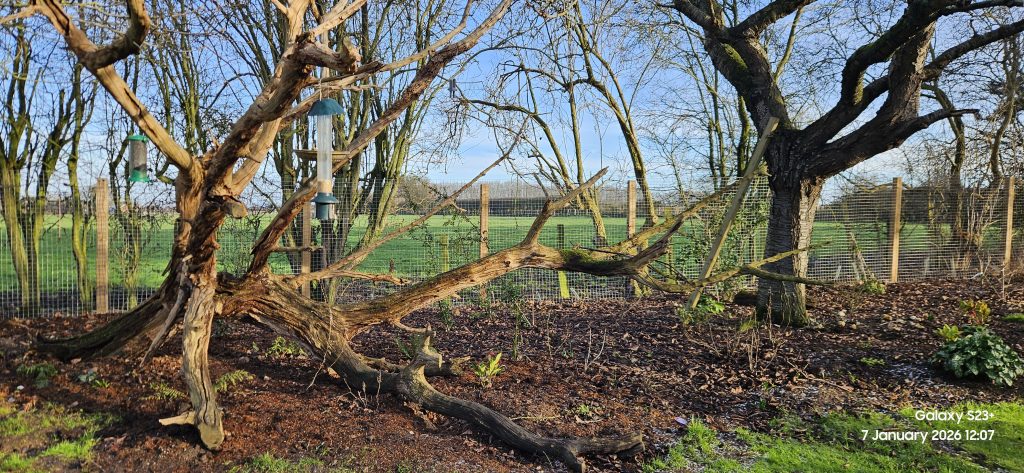
We have planted a mixed native hedge which has been in the ground for around 2 years now and growth is starting to pick up. Fortunately at one side of our garden we already have a mature hawthorn hedge (Crataegus monogyna), we have also planted some yew (Taxus baccata) which in my opinion is the best evergreen hedge. The wildlife pond is in place to support local passing creatures. It’s still early days for wildlife sightings, but already we’ve seen small birds, birds of prey, pheasants, and maybe an owl on camera. I’m hoping for clearer footage soon, and a better sense of who’s visiting.
And the not-so-charming reality: garden rats. They’ve been a headache, but I’m choosing to be humane about it. I cannot not harm any animal, I just want the plants to survive their visits.
What’s next—and what it all means
We’re still planting, digging, and creating new zones. What comes next? I’m not entirely sure. I have a long to-do list, and plenty of ideas, but perhaps what I need most is a garden plan I can actually follow. A little more prioritization might help
If you’ve been wondering what this garden is really about, here’s the heart of it: it’s about growth, not perfection. I’ll share more detailed project updates, ideas, and inspiration in future posts. I’ll tell the truth about our progress—the unvarnished truth—and hope it gives you confidence for your own projects. Real growth takes time, and that’s perfectly okay. It gives us something to look forward to.
Thank you for joining me on this journey. Here’s to many more days of digging, planting, and watching things bloom.